

Interview with an LDS Recording Engineer: Getting the Perfect Sound
Somewhere above a laundrette in Brisbane's West End, the final word on a new hymn recording is settled by a pair of small studio monitors and a man who has spent two decades learning exactly what a congregation sounds like. Andrew Beck engineers and mixes for a roster of Latter-day Saint artists, and he has built his career on the unglamorous work of getting it right.
We spoke with him across a week of sessions, from a chapel choir in Logan to a full-organ track recorded in a converted warehouse in Adelaide. The conversation kept circling back to one question: what makes a recording sound as though it belongs in a ward meeting, a family car, or a kitchen speaker three hundred kilometres from the church.
Inside a Brisbane Control Room
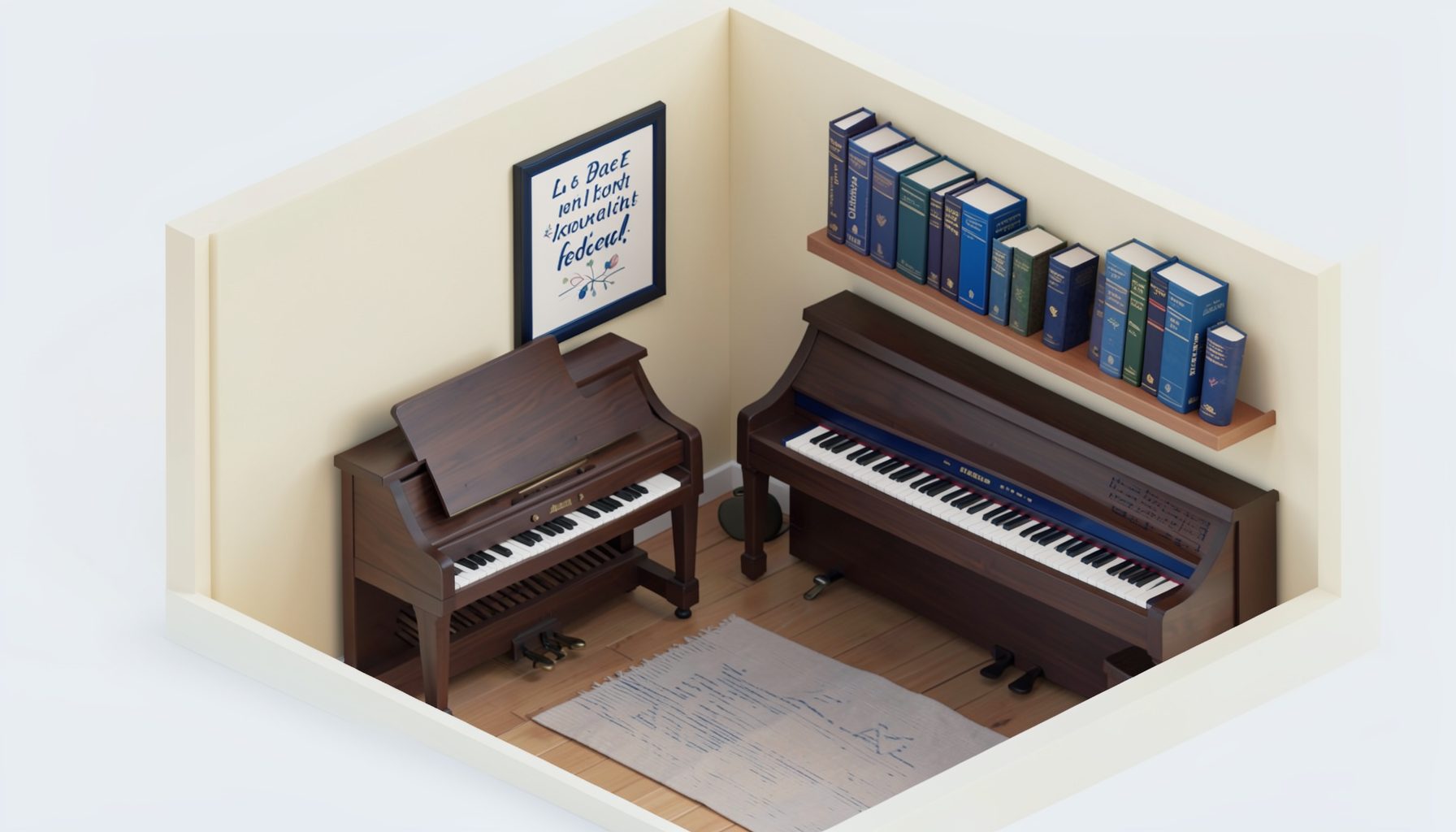
Beck's control room was a joinery until about twelve years ago. The walls are lined with movable gob absorbers, the air conditioning runs on a timer because Queensland summers turn anything above twenty-six degrees into an enemy of a recording, and the place still smells faintly of hot solder and timber dust. He built the console himself, assembled from second-hand units, and refuses to describe it as a dream rig.
His day starts early, usually with a coffee from the servo on the corner and a check of the day's weather, because a storm front rolling off the Darling Downs can put a low rumble through the power supply and a wet storm over the roof of a hall full of choir singers can be worse. "If the forecast says rain, we move the session indoors, and if the forecast says storms, we record in here and record everything twice," he says. "You plan around the weather, and the weather plans around you."
The engineer's daily checklist
- Room temperature under twenty-four degrees before any take, with the air conditioning on a fixed cycle rather than a thermostat.
- A quick sweep of the power for hum and a listen for traffic noise, which in Brisbane often means buses grinding through the gears on a main road.
- Fresh batteries in every wireless pack, plus a spare set taped inside the case lid.
- A playback check on the mix, the master and a phone speaker, because that phone speaker is how most people will actually hear it.
- A written note of every take, including the ones that failed, because a failed take often explains a successful one.
The Signal Chain from Microphone to Master
Beck describes recording as a chain of unkindly simple decisions. A microphone, a cable, a preamplifier, a converter, a workstation, monitors, and then the master. The genius is not in any single box but in how each one hands the signal to the next.
Phantom power at forty-eight volts, he explains, is what makes large-diaphragm condensers work, and the noise floor of the preamp decides how quiet the track can be before the hiss becomes part of the hymn. He speaks about mixing the way a chef talks about heat: the same recording can be ruined or rescued by a decision made late. "I have ruined brilliant takes by reaching for a compressor that I did not need, and I have rescued ordinary ones by leaving the room alone."
He also spends the gaps between projects on commercial side work, which pays the rent on the joinery. Studio engineers often pick up voice-overs, podcast production and advertorial recording to cover the slow months, and a few of those side hustles end up in strange corners of the internet, including affiliate pages such as keeping your winnings on casino free spins that clients ask for as much as they ask for jingles. He is not proud of it, but he says the discipline of writing for someone else's brief is the same discipline that keeps a hymn mix honest.
Microphone Choices for Hymns and Choirs
Choosing a microphone for Latter-day Saint material means thinking about the room as much as the singer. A soloist in a treated room behaves very differently from thirty volunteers in a hall with wooden pews and a hard ceiling.
Five microphone families cover almost everything he encounters:
| Family | Typical price (AUD) | Where it lives | Best suited to | Watch out for |
|---|---|---|---|---|
| Large-diaphragm condenser | $450–$1,600 | Small treated rooms | Soloists, duets, close-miked detail | Picks up room noise, breath and air handling |
| Dynamic cardioid | $220–$650 | Live halls, loud sources | Choir of thirty or more, close-miked | Needs real gain; less fine detail |
| Ribbon | $700–$2,200 | Quiet rooms, careful handling | Aged voices, gentle upper midrange | Fragile, no phantom power, weak below 80 Hz |
| Boundary and omni | $320–$950 | Pianos, organs, reflective halls | Hymn arrangements, whole-piano capture | Requires clean power and a very quiet space |
| Handheld broadcast | $160–$380 | Stands, live to two-track | Congregation takes, interviews | Omits the detail that makes a record intimate |
For a ward choir of twenty-five he usually starts with a single cardioid on a stand, close enough to keep the blend honest, and adds a pair of condensers only for the featured soloist. He is blunt about ribbon microphones, which he loves but handles like cutlery. "They are the best thing in the box for an older voice, and the worst thing you can hand to a nineteen-year-old in a hall with a basketball court next door."
Rooms, Weather and the Australian Recording Reality
Australians tend to assume a recording problem is a gear problem, and Beck says that is usually wrong. It is a building problem. Melbourne studios deal with tram wires humming at fifty hertz and the rattle of trams crossing an intersection; Sydney studios near the western suburbs pick up the low hum of transmission infrastructure; Brisbane studios fight humidity, ceiling fans and the neighbour's air conditioning unit.
Electricity runs at 230 volts here with angled Type I outlets, and an old chapel can have three phases in a poor state, which produces a hum that no amount of clever gain staging will remove. More often the culprit is a cheap dimmer switch or a badly earthed amplifier in the piano room. He keeps a cheap harmonic analyser in a drawer for exactly this reason.
There is also the matter of what gets thrown away. As national e-waste rules phase in, studios are handling retired equipment more carefully, and Beck has begun donating working consoles and outboard gear to the National Film and Sound Archive in Canberra, which is always looking for good tape and good preamps. On the way south he stops at the temple grounds in Adelaide when a session is booked nearby, and he admits he still measures every hall he records in against the acoustics of that sandstone building.
Mixing for Worship, Rest and Reflection
Not every mix is aimed at a pair of monitors in a control room. Many are heard first through a chapel's cheap speaker wall, at low volume, with a congregation of people in their sixties and seventies, some with hearing aids, some with no idea what a high-pass filter is.
That changes everything about the mix. Beck builds a translation pass in the last twenty minutes of every session, playing the track at a level barely above a whisper and listening for the point where the words stop being words and become texture. "If the lyric disappears on a church speaker, it has failed, even if it sings beautifully in the cans."
The same attention to dynamics is why therapists working inside the Church's welfare community keep coming to engineers rather than the other way around, and healing through hymns is a good example of how that thinking has spread beyond the studio. A hymn arrangement recorded with restraint, with space for breath and no wall of reverb, is a very different tool from a heavily processed pop master, and it is the version most people in a ward actually want to sing along with.
Live Sessions and the Logistics of Touring
Every few months Beck packs a rack for a live recording, which is a different discipline entirely. A hundred and twenty choir members in a large hall, organ and congregation together, captured to a two-track recorder while a multitrack safety system runs in parallel. "Live is the only format where you cannot go back," he says. "You get one pass at the energy, so you capture it wide and clean and you fix it later."
Regional dates add their own headaches: freight, generator power in country halls, and flights that decide on Friday whether Saturday is happening. Engineers who travel regularly keep a folder of practical references close by, and a guide to travelling with disposable vapes is one of the odd but genuinely useful items in it, given how many crew members carry one through a multi-state run.
He records the choir in sections whenever the schedule allows, because a hundred untrained voices in one take will always blur, and layered sections let him place each group in the room. The result sounds effortless, and that is the point.
Buying Recordings That Suit Your Own Listening
Back on the shopping side of the equation, Beck's advice is blunt and practical. The format matters less than the mix, and the mix matters less than the room you will play it in. CD, MP3 album, DVD, songbooks, hymn arrangements and piano sheet music all serve the same congregation, and browsing the new releases page is the fastest way to see what has just landed, particularly during EFY season and the run-up to Christmas.
Choosing by listening situation
- For a kitchen speaker or a car stereo, pick recordings with a strong vocal centre and restrained bass, which means most modern hymn masters are fine.
- For a home system or headphones, look for arrangements with real dynamics rather than everything pushed to the same level.
- For a ward choir, sheet music or a piano arrangement with the vocal line clearly marked will help more than any production choice.
- For scripture study and personal listening, an instrumental piano arrangement gives you something to listen to without words in the way.
- For shared family listening, check the running time, because Australian road trips between Melbourne and Sydney are seven hours and a sixty-minute songbook is a commitment.
Beck's parting thought is that most albums about sound quality are arguing about the last one per cent of a recording that most listeners will never hear. What people actually notice, he says, is whether the singer sounds like a person in a room they know. Get that right and the rest is housekeeping, and he has made his living on housekeeping for twenty years.