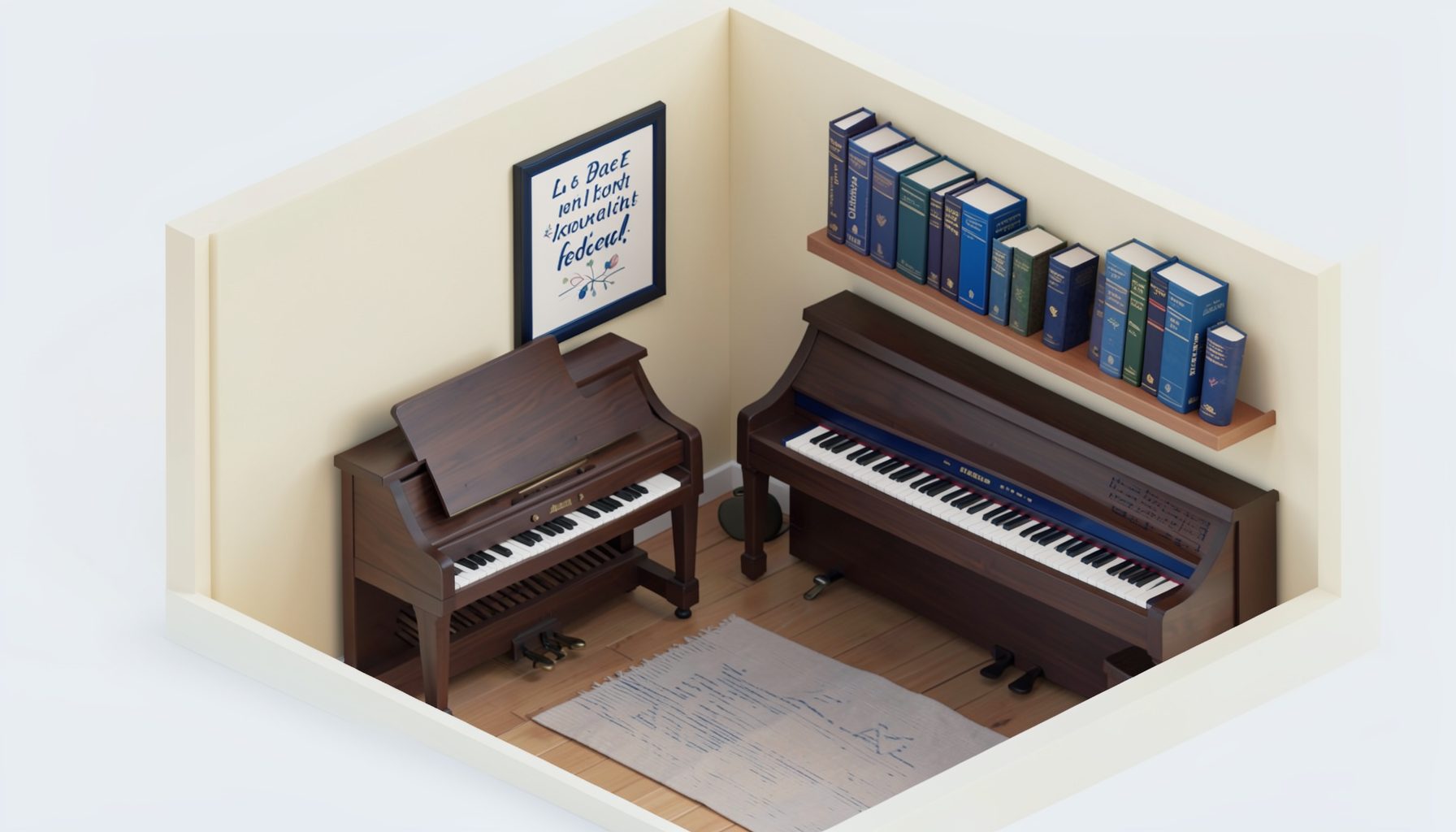



Challenging Organ Accompaniments in Five Beloved Hymns
The organ carries melody and harmonic foundation within Latter-day Saint worship in a way few other instruments can. Across chapels from Perth to Brisbane, organists work with instruments ranging from modest electronic consoles to pipe organs with rich tonal variety. When an accompaniment is technically demanding, the organist must balance reverence with rhythmic precision, managing independent pedal lines while coordinating manual changes.
Australian organists frequently prepare music with limited rehearsal time, particularly in regional areas where one musician may cover multiple congregations. Studying hymns that present real technical hurdles pays dividends, since the same skills transfer to dozens of other pieces. The following five hymns appear in meetings and conferences across Australia, and each carries an accompaniment that rewards careful preparation.
Pedal Technique in "I Need Thee Every Hour"
"I Need Thee Every Hour" is a staple at funerals and testimony meetings, and its tender text invites an accompaniment that breathes. The published arrangement includes a flowing pedal line moving in eighth notes for several bars, which feels gentle on paper but requires confident toe-heel technique. An organist unused to playing melody in the pedals while the manuals carry the harmony may find the opening bars surprisingly slippery.
Many Australian organists first encounter this hymn as a choir accompaniment. The original blog post on why-i-need-thee-every-hour-works-for-organ-and-choir explores how vocal lines can support a hesitant player, but the organ part still demands independence of hands and feet. Practise the pedal line alone at half speed, then add the left hand, and finally the right.
Registration Changes in "How Firm a Foundation"
Few hymns feel as sturdy as "How Firm a Foundation", yet the organ accompaniment asks the player to rethink registration three times across five verses. Marked dynamic swells require the organist to draw or return stops without breaking the singing, a skill that calls for familiarity with the console layout. On older Australian chapel organs, quick registration changes become a matter of muscle memory.
A second challenge lies in the final verse, where the harmony moves into a brighter key and the accompaniment must support a sudden lift in energy. Players using digital instruments can programme these changes as pistons, but those at a pipe organ with limited manual divisions must plan the registration sequence beforehand. Resources such as chat noir store can help locate editions in a suitable key.
Rhythmic Freedom in "Come, Thou Fount of Every Blessing"
"Come, Thou Fount of Every Blessing" carries a flowing triplet accompaniment in several published settings, and the organist must hold a steady pulse while the choir breathes unpredictably. The interlude between the final two lines is often extended by a bar or more, leaving the organ to fill the space with improvised material. Australian organists in regional centres often find themselves expected to compose these interludes on the spot.
Practising with a metronome helps lock in the underlying triplet feel, but the real skill lies in listening. Train the ear to anticipate where a choir director might slow down for emphasis, and shape the accompaniment to support rather than resist the breathing.
Chromatic Writing in "Abide with Me; 'Tis Eventide"
"Abide with Me; 'Tis Eventide" features chromatic passing tones in the alto and tenor lines that can confuse an organist reading from the bass clef alone. The accompanying organ part mirrors these chromatic shifts, requiring smooth voice leading that avoids parallel fifths. In Australian hymnals printed in older notation style, accidentals sometimes appear without courtesy reminders, and a missed sharp can derail an entire verse.
The challenge is compounded by the hymn's slow tempo, which exposes any uncertainty in finger placement. Many organists find it useful to practise the left hand alone first, singing the alto line aloud to internalise the chromatic motion. For those interested in how this hymn has been reimagined, a look at the 2000 EFY album reveals creative instrumental textures from that era.
"Guide Us, O Thou Great Jehovah" and the Welsh Tradition
"Guide Us, O Thou Great Jehovah" draws on a Welsh tune that moves with martial energy, and the organ accompaniment often includes dotted rhythms that demand crisp articulation. The opening bars feature a walking bass in the pedals, and the manual parts carry a countermelody that must project above the congregation without overwhelming it. Australian organists familiar with the broader Anglican repertoire will recognise the technique.
The trickiest passage arrives at the modulation to the relative major, where the organist must navigate a brief but exposed solo line in the right hand while the pedals continue their march. Playing this hymn on the historic organ at the Melbourne Town Hall would differ greatly from playing it on a chapel electronic. Just as a look at rockabilly fashion in Japan reveals how musical presentation shifts across cultures, organ accompaniment styles also vary by context.
Practice and Listening Approaches
Learning challenging hymn accompaniments follows the same path whether you sit at a pipe organ in Adelaide or a portable console in a rented school hall in Hobart. Practise each voice separately before combining them. Twenty focused minutes often yields more progress than an hour of distracted repetition.
Recording yourself provides honest feedback, especially where timing tends to drift. The evolution of LDS contemporary music from the 1980s onward provides helpful context on how accompaniment styles have changed.
Listening to accomplished organists builds an internal model of how the music should breathe. Local societies in Sydney and Melbourne occasionally host workshops on Latter-day Saint repertoire, offering valuable feedback and community.
Recommendations for Organists Tackling These Hymns
Whether you are preparing for a regional gathering in Cairns or a quiet testimony meeting in a small country chapel, a few practical habits make difficult accompaniments more manageable. The following suggestions draw on common challenges raised by Australian organists and the techniques that have proven most useful in addressing them.
- Mark the score in pencil with registration changes and breath marks before practice.
- Practise each voice separately at half tempo before combining hands and feet.
- Record a full run-through weekly and review it with a fresh ear.
- Listen to at least two professional recordings of each hymn.
- Schedule the most demanding hymn for a service when rehearsal time is plentiful.
- Build a small library of sheet music from reliable sources.
- Reach out to a local organ society or mentor for feedback.