

How to transcribe an LDS hymn for handbells
Transcribing an LDS hymn for handbells combines musical analysis, arranging, and practical ensemble planning. The goal is to preserve the hymn’s recognizable melody while adapting its harmony, rhythm, and texture to the instruments available. A successful arrangement should sound faithful to the source and remain comfortable for the ringers performing it.
Handbells have a distinctive resonance that can make a simple hymn feel spacious and luminous. At the same time, their fixed pitches, ringing technique, and limited sustain require careful decisions. A piano or vocal score may contain more notes than a small handbell group can reasonably play, so transcription involves selecting what matters most.
Begin with a legal, readable source score. A discontinued catalog such as Your LDS Music Store documented hymn arrangements, sheet music, recordings, and related resources that may help you understand the range of published styles. Use an available LDS sheet music source as a reference, then verify that you have permission to copy, modify, or perform the material.
Choose the source and define the arrangement
Select a hymn with a clear melodic shape and a manageable harmonic language. Songs with repeated phrases, moderate tempos, and familiar cadences are generally easier to arrange than highly ornamented or chromatic pieces. Decide whether your handbell version will follow the vocal melody, a four-part hymn setting, or a more independent instrumental interpretation.
Your ensemble size determines the scope of the transcription. A group with eight ringers may cover two octaves and assign one or two notes to each player, while a larger choir can support fuller chords, inner voices, and bass movement. Write down the lowest and highest bells available before assigning notes. This prevents a beautiful passage from becoming impossible simply because a crucial pitch falls outside the instrument set.
Also choose the performance setting. A worship service may call for a restrained, singable arrangement, while a recital permits more modulation, interludes, and rhythmic variation. Listening to instrumental scripture music can provide ideas for pacing, atmosphere, and how much space to leave between musical statements.
Map the melody and rhythm
Write the hymn’s melody in a clean working score before arranging any accompaniment. Mark each phrase, breath point, repeated motif, and important cadence. Singing or softly playing the melody while you work helps reveal which notes carry the identity of the hymn. Those notes should receive the clearest articulation and the most reliable bell assignments.
Handbells sustain after they are rung, so the written rhythm may need adjustment. A series of quarter notes on a piano can blur if every bell continues sounding. Use rests, damping, or alternating players to create separation. Conversely, a long vocal note may require a repeated ring or carefully timed echo if you want the sound to remain present.
Keep the original meter unless there is a strong artistic reason to change it. The congregation or audience should still recognize the hymn’s natural pulse. If the melody contains pickup notes, syncopation, or dotted rhythms, simplify them only when the change improves ensemble accuracy without weakening the character of the tune.
| Musical element | Source-score question | Handbell adaptation |
|---|---|---|
| Melody | Which notes define the phrase? | Give them clear attacks and consistent tone |
| Rhythm | Where do notes begin and end? | Add damping or rests to prevent overlap |
| Harmony | Which chords support the cadence? | Reduce or redistribute notes to fit the bells |
| Bass line | Does the lowest part move often? | Use essential roots and avoid awkward leaps |
| Dynamics | Where does the hymn grow or relax? | Plan coordinated ringing and damping changes |
Reduce harmony without losing character
A four-part hymn setting may contain soprano, alto, tenor, and bass lines, but a handbell transcription does not need to reproduce every note. Start with the melody and bass. Add the third or seventh of a chord only when it clarifies the harmony or creates a meaningful color. In many passages, three carefully selected pitches will sound more polished than a crowded chord.
Preserve the strongest harmonic landmarks: the opening tonic, predominant movement, dominant preparation, and final cadence. These points make the arrangement feel grounded. If the original includes passing chords that are too difficult for your group, replace them with a sustained harmony or a simpler chord progression while retaining the phrase’s direction.
Consider bell changes when distributing chords. Assigning every pitch to one ringer can create excessive movement, especially in a quick hymn. Shared notes can remain with the same player while changing bells around them. When possible, give ringers adjacent or near-adjacent pitches rather than forcing repeated leaps across the table.
Build a playable handbell score
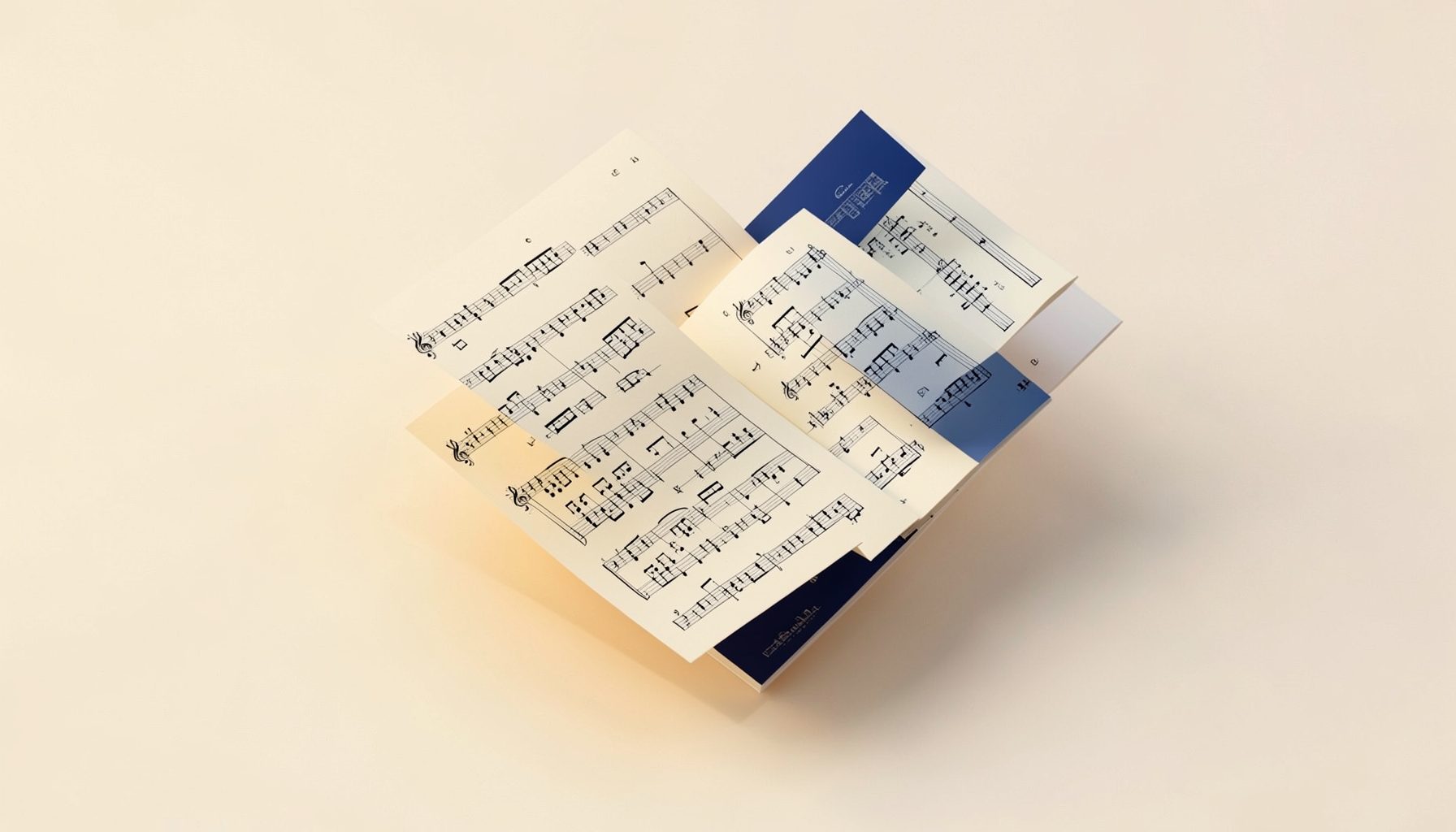
Create a part layout that shows exact pitches, rhythms, accidentals, rests, and damping instructions. Mark LV for let vibrate only when the resonance is intentional; otherwise, ringers need to know when to stop the sound. Use familiar handbell notation consistently, including symbols for mallets, thumb damping, table damping, or stopped sound when those techniques are needed.
Avoid writing every part at the same level of complexity. A beginner-friendly arrangement might give some players repeated whole notes while experienced ringers handle moving counterlines. This layered design supports a stable pulse and makes rehearsals less frustrating. It also allows absent ringers to be replaced more easily.
Plan page turns and bell changes before rehearsal. A technically correct score can still fail in performance if a ringer must grab an unreachable bell during a fast passage. Write optional notes in parentheses when a chord can function without them. Such flexibility is especially useful when arranging for a small church ensemble with changing attendance.
Shape tone, dynamics, and expression
Handbell music depends on coordinated sound rather than volume alone. A melody can be brought forward by giving it a slightly stronger attack, while accompaniment bells use lighter ringing and faster damping. Mark dynamic changes across complete phrases instead of placing isolated volume instructions on every measure.
Use ringing techniques to distinguish sections. Sustained chords can support a reflective verse, while gently repeated notes can add motion to a bridge or refrain. Mallets may create a soft, organ-like pulse, but they should be used sparingly if the hymn’s devotional character depends on warmth and resonance.
Study the hymn’s historical and spiritual context before making major expressive choices. For example, an arrangement of “Praise to the Man” may call for a broad, ceremonial treatment rather than a hurried tempo. Background on the hymn’s character can be found in this hymn spotlight, which may help guide interpretation without dictating the final arrangement.
Rehearse, revise, and prepare the performance
Begin rehearsal with the melody alone. Confirm pitch accuracy, entrances, cutoffs, and damping before adding harmony. Once the tune is secure, introduce bass notes, then inner voices and decorative figures. This order makes errors easier to identify and prevents the ensemble from practicing confusion.
Record a rehearsal from several distances. Handbells can sound balanced from the table but overly bright or muddy in the audience. Listen for covered melody notes, uneven chord releases, rushed cadences, and excessive sustain. Revise the score rather than expecting ringers to compensate for an awkward passage through repeated effort.
Use this practical checklist when finalizing the arrangement:
- Confirm that every written pitch exists in the ensemble’s bell set.
- Mark damping, let-vibrate passages, accidentals, and dynamic changes clearly.
- Test difficult bell changes at the intended performance tempo.
- Keep the melody audible through balance, attack, and register.
- Prepare a simplified substitute for any optional inner part.
A polished transcription should feel natural in the hands of the ringers. Play through the entire hymn without stopping, then ask whether the melody remains recognizable, the harmony supports its message, and the technical demands serve the music. Make the final score easy to read, rehearse it in sections, and perform it with the calm, unified tone that allows an LDS hymn to speak clearly through handbells.