

The evolution of LDS sheet music design in the modern era
LDS sheet music is more than a transcription of a hymn or song. It is a working interface between belief, performance and memory. Its typography, page turns, chord placement and musical hierarchy can help a congregation sing, help a pianist rehearse and help families preserve songs they love. Design changes therefore reveal how Latter-day Saint music is taught, shared and used. Learn more about Hautemagie.com.
Today’s repertoire spans traditional hymns, sacramental music, choir arrangements, children’s songs, devotional albums and contemporary worship pieces. Printed editions remain important, while PDFs, tablets and print-on-demand services have expanded access. Modern design must balance reverence with practical needs such as readable lyrics, efficient page turns and affordable distribution. Learn more about A Buyer S Guide To Lds Christmas Albums On Cd.
From hand copying to professional engraving
Early Latter-day Saint music depended on handwritten copies, simple typesetting and borrowed European engraving conventions. Notes were crowded, lyrics sometimes competed with the musical staff, and page layouts varied considerably. An account of [early LDS music history] shows how publications gradually established a more recognisable musical identity for the movement. Learn more about Spotlight On The 1998 Album Saturday S Warrior Revival.
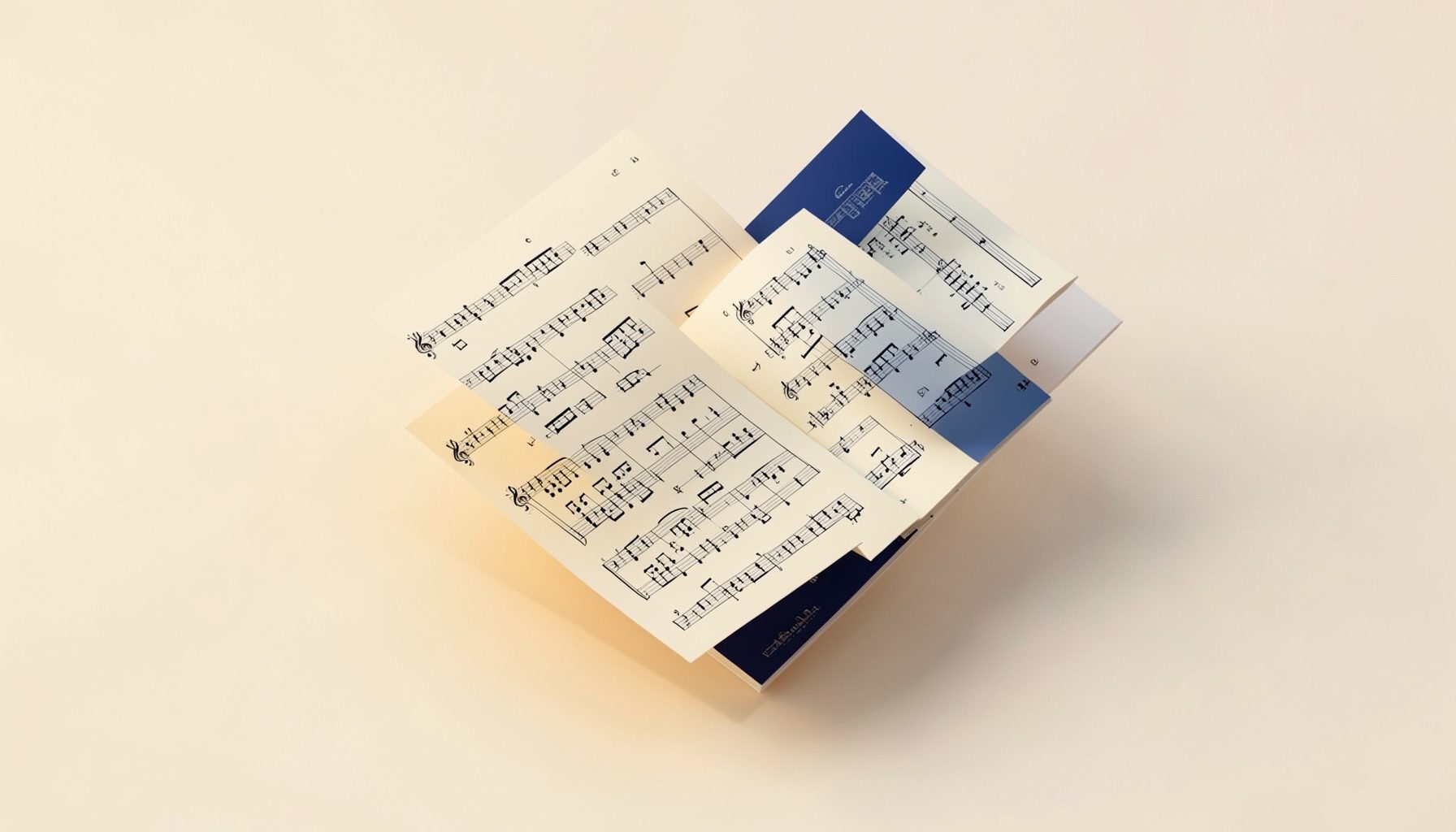
Improved engraving brought cleaner noteheads, consistent spacing and clearer divisions between melody, harmony and accompaniment. These changes were modest compared with contemporary digital design, yet they established the principle still central to LDS music publishing: the page must serve performance without distracting from the sacred character of the text. Learn more about The History Of Lds Music In The Early 20th Century.
Hymnals, page architecture and congregational use
Hymnals transformed collections of songs into coordinated resources for whole congregations. Page architecture now places music, lyrics and sometimes simplified accompaniment in predictable positions. Consistent margins, restrained colour and clear stanza numbering help organists locate passages quickly and help congregants follow unfamiliar words.
Seasonal and devotional music also extends beyond the standard hymnal. The wider catalogue explored in a [Christmas album guide] illustrates how recordings, carols and seasonal songbooks developed into complementary parts of the LDS music market. Corresponding sheet music carries those themes into the home, classroom and worship setting.
Lyrics, sacred text and visual clarity
Modern notation software has given publishers greater control over the relationship between lyrics and music. Syllable alignment can now follow natural vocal phrasing, while staff sizes accommodate children, mixed-language congregations and performers with different levels of sight-reading. Larger type, stronger contrast and carefully positioned chord symbols also improve accessibility without making a score look informal.
The [Saturday's Warrior Revival spotlight] illustrates how a 1998 recording existed within an already changing musical environment. Album-era music brought shorter songs and contemporary language into many homes, creating new demand for readable keyboard parts, chord sheets and choral adaptations. Visual clarity became essential as these songs moved from recordings into communal singing.
Piano arrangements and expressive notation
Piano editions require more than the accurate transfer of notes. Fingering, pedalling, phrase marks, dynamics and page turns determine whether an arrangement feels musical or merely playable. Digital engraving allows editors to include detailed performance directions, while simplified versions can provide a genuine reduction without losing the character of the original melody.
The broader repertoire represented by the [Haute Magie catalogue] reflects the wider piano market that surrounds LDS sheet music. These resources matter because independent pianists, teachers and accompanists often alternate between classical collections, film music, hymns and church repertoire. Consistent engraving across those styles makes practice, sharing and public performance easier.
Digital scores, print on demand and interactive features
Desktop publishing and cloud distribution have allowed small publishers to produce editions without large print runs. Software such as Finale, Sibelius and LilyPond supports professional engraving, while PDF workflows support quick distribution. Print-on-demand services also let buyers obtain bound copies of niche arrangements without forcing publishers to predict demand.
Newer editions may include audio references, video demonstrations, linked lyrics or QR codes. These features can assist rehearsal, although a crowded screen can work against concentration. The best modern score therefore treats digital material as an enhancement rather than a replacement for clear notation, balanced spacing and an uncluttered reading experience.
How formats work for Australian musicians
Australian use adds practical considerations. Congregations in Brisbane and Sydney may maintain shared hymnals for Sunday meetings, while pianists in Melbourne and Adelaide often need individual parts for rehearsal or community performances. A digital copy can be emailed quickly, but reliable printed scores remain useful for long choir sessions and for musicians working away from a screen.
Purchasing is shaped by the Australian market, where customers compare prices in Australian dollars, account for GST and consider international postage. Local piano teachers and churches commonly source specialist editions alongside general booksellers and online stores. It is fair dinkum sensible to check the total delivered cost before committing to an imported edition.
The trade-offs are clearest when formats are judged by their intended use.
| Consideration | Printed hymnbook or score | Digital edition |
|---|---|---|
| Main purpose | Congregational singing and reference | Practice, rehearsal and performance |
| Layout | Fixed pages with durable binding | Fixed PDF or reflowable display |
| Cost | Higher purchase cost and possible postage | Often lower, with varying licence terms |
| Distribution | Requires storage or postal delivery | Download, email or subscription access |
| Main risk | Lost, damaged or outdated pages | File, device or account dependence |
| Strongest use | Shared hymnals and permanent collections | Quick rehearsal and flexible practice |
For many Australian churches, the practical answer is to maintain printed copies for regular use while keeping licensed digital files for preparation, travel and occasional ensemble work.
Practical choices for musicians and congregations
Selecting an edition involves balancing musical completeness, readability, cost and permitted use. The intended performer should determine whether a basic chord sheet, a full score or an arrangement with cues is required.
- Match the edition to its purpose, whether congregational singing, private practice, choir rehearsal or public performance.
- Check notation depth, lyric accuracy, chord placement and the inclusion of cues for less confident players.
- Confirm print, photocopying and digital-sharing rights, especially for choirs, classes and travelling missionaries.
- Keep both a protected working file and a printed reference where long-term access matters.
- Preview the layout on the device or instrument stand that will actually be used during rehearsal.
Used consistently, these practices keep LDS music readable, lawful and available to successive generations of Australian Latter-day Saint musicians.