

Hymn arrangements for solo violin: A review of available scores
Hymn arrangements for solo violin sit between worship music and concert repertoire. A simple setting gives a beginner a clean tune, while an ornamented version gives an experienced player room for dynamic shaping. The right choice depends on range, key, accompaniment, reading level and rehearsal time. Learn more about The Best Motorcycle Tyres For Wet British Roads.
The former Your LDS Music Store no longer operates, but its catalogue documented how Latter-day Saint music was packaged for online shoppers. Its mix of CDs, DVDs, songbooks, hymn arrangements and piano sheet music raises a practical question: which kinds of solo violin scores are genuinely useful to Australian players, whether for sacrament meeting, a family Christmas, community carols or a recital programme? Learn more about Review Of The Other Side Of Heaven Soundtrack.
Finding an arrangement that fits
Begin by identifying the source edition. Some solo parts give only the tune; others include chord symbols, bowing, fingerings or a separately printed piano part. That distinction affects rehearsal when the pianist is managing an organ, keyboard or congregation-led accompaniment. Learn more about How To Frame And Display Lds Musical Instruments As Decor.
Level labels are helpful only when checked against the actual notation. A piece marked “intermediate” may require quick position changes, while one marked “easy” may exploit an unusually high position. Look for a playable range, logical bow divisions and clear phrase marks rather than relying on marketing language.
Scores should also be judged by how completely they support performance. The store's [Other Side of Heaven] review is a useful reminder that a soundtrack and a playable part solve different needs: one establishes mood, while the other supplies notes, bowings and rehearsal cues.
Beginner and intermediate scores
Beginner hymn arrangements usually present a single melody line, limited accidentals and simple rhythms. Their chief virtue is confidence: a young player can concentrate on pulse, bow contact and clean note changes instead of decoding dense harmonic notation. Longer bow strokes and pauses at phrase endings make the tune easier to hear.
Intermediate arrangements may add a second violin line, open-string accompaniment or light double stops. These enrich a hymn without turning it into a violin concerto. The best editions explain sustained notes, mark breaths at sensible places and avoid excessive fingering clutter.
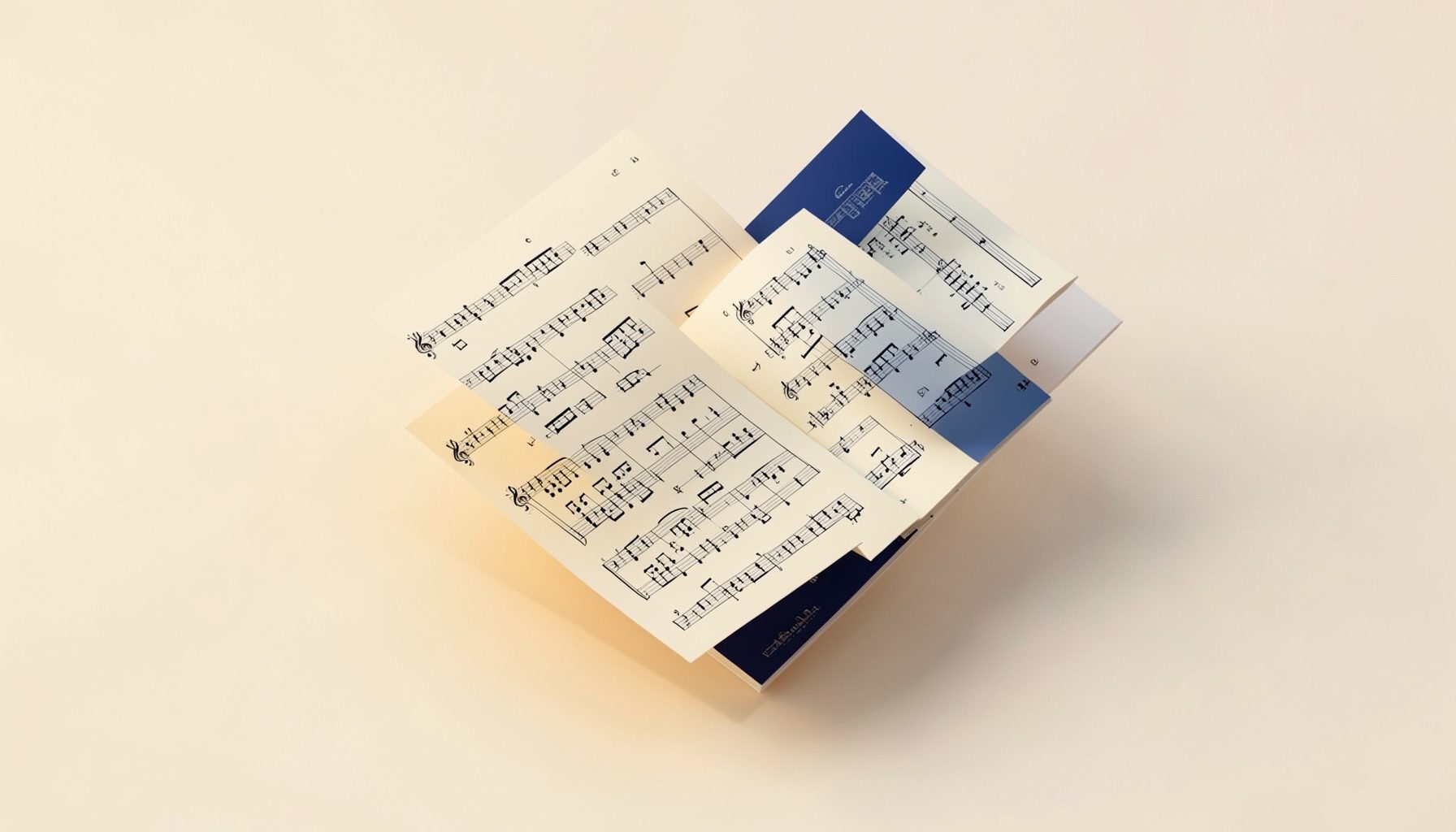
Reviewing the notation reveals more than page count. Traditional titles such as “Amazing Grace,” “Come, Thou Fount of Every Blessing” and “How Great Thou Art” can appear very differently across editions. Compare the melody, tempo indications and chord progression rather than assuming that one arrangement is authoritative.
Concert and ensemble arrangements
Concert treatments can include double stops, harmonics, broad arpeggios, countermelody and written-out piano accompaniment. Such a score suits a recital where the violin supplies both melody and occasional harmony. For worship, however, an elaborate introduction may delay congregational singing or obscure the words.
An experienced arranger preserves the character of a hymn while giving the string line a distinct voice. The melody remains central, harmonic support follows the original sacred tune, and rhythmic changes serve the phrase. That balance matters when the piece is played by a soloist, family group or small ensemble in a community hall.
Australia Day on 26 January and ANZAC Day on 25 April create additional demand for polished patriotic material. For these occasions, check that the violin part follows the ensemble score, sounds balanced beside brass or percussion and avoids excessive page turns. Church music events in Sydney and Melbourne also reward versions that are technically demanding but rehearsal-friendly.
Music for Australian occasions
A solo violin arrangement has unusual flexibility. It can accompany an organ at church, stand alone at a community gathering, or provide the lead line for a family group singing around a piano. Short, familiar hymns often work best in informal settings because listeners can join in without a separate violin booklet.
Climate is part of practical suitability. Brisbane's humid summers can make pages curl and put a violin at risk if it is carried between an air-conditioned car and a hot outdoor venue. Choose a score that stays open on a music stand, and allow time to acclimatise a sensitive instrument before a public performance.
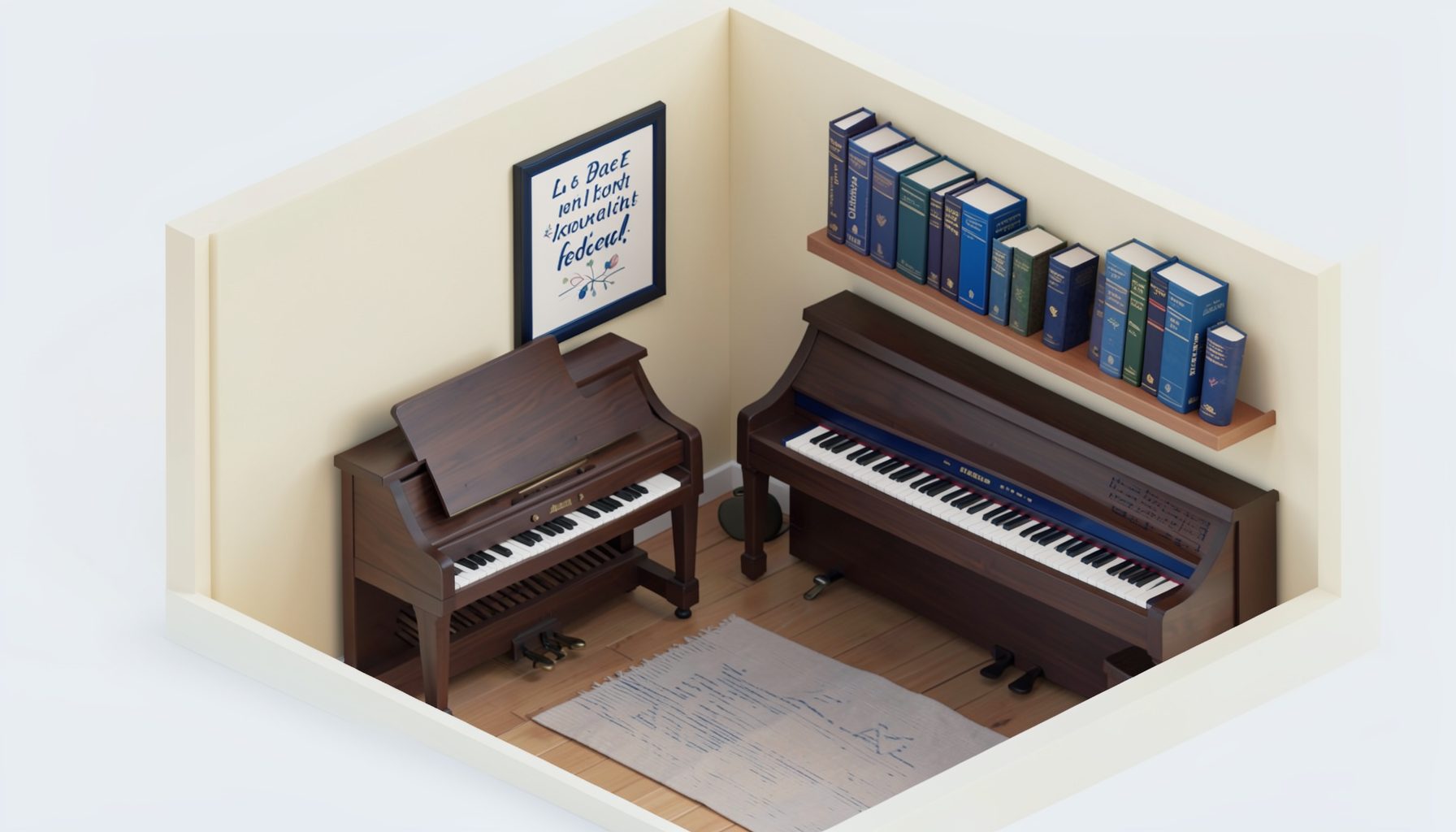
Home organisation also affects practice. [Instrument display ideas] can show how a violin, bow, rosin and music stand might coexist in a domestic rehearsal corner, making the score easy to reach rather than buried in a cupboard. A tidy display does not replace a proper case and humidity care, but it can encourage regular playing.
Technique, weather and practice
Good notation should reduce guesswork. Long bow strokes suit broad hymn phrases, while dotted rhythms and syncopations need subdivision during practice. Fingerings should support natural positions, and printed bowing should agree with the metre rather than impose an arbitrary direction on every bar.
Outdoor festivals and Australian church carols can expose strings to moisture and grit. The need for predictable grip and directional control, reflected in [wet-road tyre guidance], offers an analogy for bow hair, rosin and case management, although British road conditions are not a substitute for local weather advice.
Practise with the intended accompaniment whenever possible. A violin line that sounds exposed beside a full organ may need a lighter bow or more generous vibrato; a pianist working from the wrong chord chart may create imbalance. Record one rehearsal and listen for places where the melody disappears, suggesting that the pacing or accompaniment needs attention.
Rights, formats and buying checks
Copyright status depends on the hymn text, tune, arranger and publication date. Public-domain melodies do not automatically make every modern arrangement free to copy. For an LDS hymnal or commercial score, check whether the seller grants performance rights and includes everything required for rehearsal and performance.
Digital PDFs are convenient for buyers anywhere in Australia, but printing quality, file security and page size matter. A preview should show every page, not only the title. Print-on-demand services help when no local stock exists, although delivery time, overseas postage and the risk of a damaged copy should be considered.
Compare prices in Australian dollars after allowing for GST, currency conversion and import charges on overseas purchases. Also compare a specialist PDF with a properly checked physical copy from an Australian music retailer. Clear engraving, complete accompaniment and responsive support often matter more than a small discount.
Recommendations for choosing a score
A shortlist becomes easier when every candidate answers the same questions about playing level, musical setting and rehearsal time.
- Match the arrangement to the player's reading level, especially for position changes, bowings and optional double stops.
- Check the key, highest and lowest notes, playing time, page turns and whether piano or organ parts are included.
- Listen to the original hymn first, then compare its melody and chord sequence with the arrangement.
- Confirm copyright and performance permissions, particularly for concerts, public events or printed programmes.
- Choose a source that supplies complete previews or sample pages, and keep printed music flat in dry conditions away from direct heat.
For most Australian musicians, a clear intermediate edition is the safest starting point: it is flexible enough for home worship and ensemble rehearsal while offering enough detail to sound polished. A concert arrangement becomes worthwhile when the programme, accompanist and rehearsal schedule support its added techniques.
| Score type | What it includes | Best suited to | Principal limitation |
|---|---|---|---|
| Melody-only part | Tune, time signature and basic markings | Beginners, quick worship and family singing | Offers little control of harmony or phrasing |
| Melody with chord symbols | Lead line plus harmonic cues | Soloists accompanying themselves on piano | The player must interpret chords and rhythm |
| Arranged violin and piano | Fully notated solo part and accompaniment | Recitals, Christmas programmes and concert worship | Requires more rehearsal and careful balance |
| Ensemble part | Violin line with cues from other sections | Community choirs, orchestras and festival groups | Less useful for a completely independent soloist |
| Facsimile hymnal part | Original notation reproduced in context | Players familiar with the standard LDS hymnbook | Engraving may be less accessible and pagination less convenient |